Follow this fall gutter cleaning checklist in Topsfield to protect against winter ice dams. Simple steps homeowners can do before the first frost.
Clogged gutters in October are the single most reliable predictor of ice dam calls we get in January, which is exactly why a fall gutter cleaning checklist in Topsfield matters more here than in towns with fewer trees. Topsfield's wooded lots drop leaves fast and heavy each fall, and a gutter packed with debris in November has nowhere to send meltwater once the first hard freeze hits.
What Should Be on a Fall Gutter Cleaning Checklist?
A fall gutter cleaning checklist in Topsfield should cover four things: clearing debris from the gutter channel itself, checking downspouts for blockages, confirming gutters are pitched correctly toward the downspout, and inspecting for loose fasteners or sagging sections before winter weight gets added. Skipping any one of these leaves a gap that can turn into a bigger problem once snow and ice show up. The goal is simple: water needs a clear, fast path off the roof before freezing temperatures arrive.
What Homeowners Usually Notice First
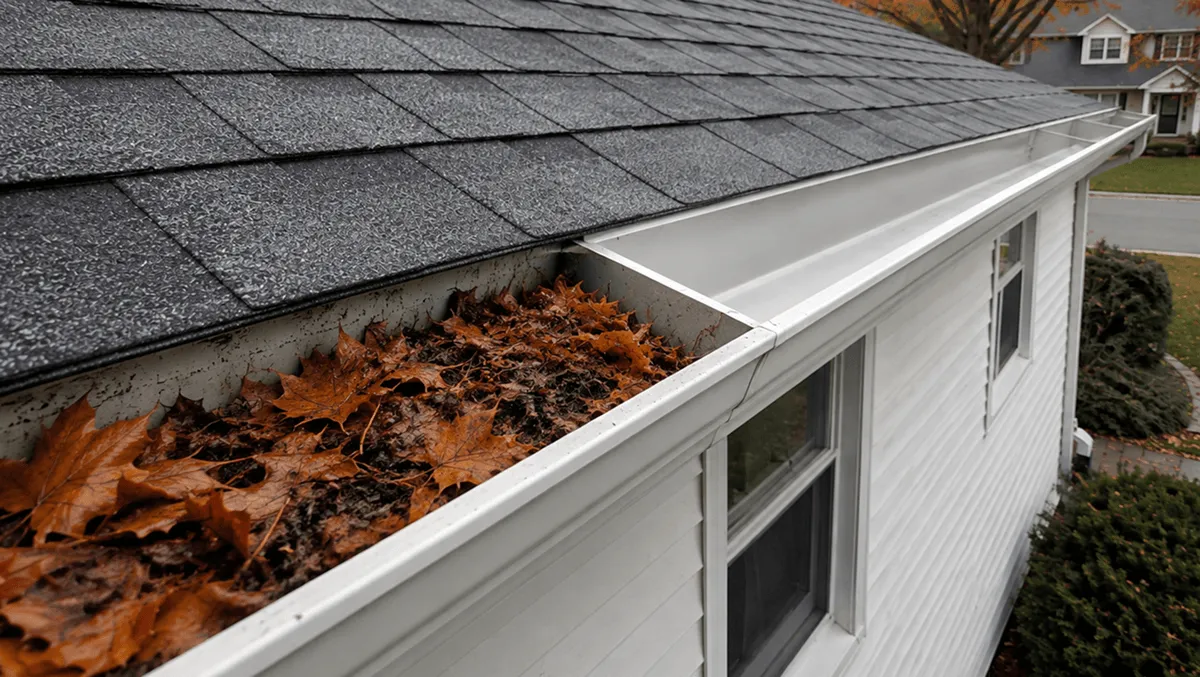
Most Topsfield homeowners notice the problem visually before they think about function: gutters visibly overflowing with leaves, sometimes with small plants or moss actually taking root in the buildup by late fall. It looks messy, but the real issue is what is happening underneath that debris layer, where water is pooling instead of draining.
The second thing homeowners notice, usually the following winter, is an ice dam forming along the eave, often directly below a gutter section that was never cleared. By that point, the connection between the fall cleaning they skipped and the January leak is easy to miss, since months have passed and the two events feel unrelated.
A scenario we see often in Topsfield involves a homeowner on a heavily wooded lot who cleans the gutters once in early October, right as the first leaves drop, and assumes the job is done for the season. A second wave of leaves, often from oaks that hold their leaves later than maples, comes down through November and refills the same gutters right before the first freeze. The homeowner who only cleans once misses this second wave entirely, and the gutters end up just as packed heading into winter as they would have been without any cleaning at all.
What a Roofing Contractor Looks For
On many gutter inspections we run in Topsfield each fall, we are checking more than whether the channel is full of leaves. A roofer evaluates gutter pitch first, since even a perfectly clean gutter will pool water if it is not angled correctly toward the downspout. A quarter inch of drop per ten feet of gutter run is the general target, and gutters that have sagged or shifted over the years often fall short of that without it being obvious just by looking.
What homeowners often miss is that downspouts clog independently of the gutter channel itself, often at the elbow joint where the pipe changes direction. A gutter that looks completely clear at the top can still back up and overflow if the downspout underneath is packed with compacted debris from a previous season. We run water through each downspout during inspection specifically to catch this, since it is invisible from the ground and easy to overlook during a quick visual check.
We also check fastener condition and gutter hangers, since a gutter loaded with wet leaves and debris weighs significantly more than an empty one. A hanger that was borderline in the summer can pull loose entirely once fall debris and the first heavy snow add real weight to the system, and a section of gutter that sags away from the fascia no longer drains correctly even if it is completely clear of leaves.
Something we specifically watch for on Topsfield's wooded properties is a gutter guard that has been in place for several seasons without a check. Guards reduce debris buildup, but they do not eliminate it entirely, and fine debris like pine needles or seed pods can still work through some guard designs and accumulate underneath where they are harder to spot. A roofer evaluates whether an existing guard system is still functioning as intended or has quietly become part of the clog itself.
Your Fall Gutter Cleaning Checklist
1. Clear all debris from the gutter channel by hand or with a scoop. Do not rely on a leaf blower alone, since compacted, wet leaves at the bottom of the channel often need to be physically lifted out.
2. Flush each downspout with a hose. Water should exit freely at the bottom within a few seconds. If it backs up or drains slowly, the downspout likely has a hidden clog at an elbow joint.
3. Check gutter pitch along the entire run. Look for standing water after a flush test, which signals a low spot or incorrect pitch that debris removal alone will not fix.
4. Inspect hangers and fasteners for looseness or rust. A gutter section that flexes or pulls away slightly from the fascia when pressed needs re-securing before winter weight gets added.
5. Look for granule buildup from the roof itself in the gutter debris. Heavy granule loss mixed in with leaves can be an early sign of aging shingles worth mentioning during a broader roof inspection.
6. Confirm downspout extensions direct water away from the foundation. A properly cleaned gutter system still causes problems if water dumps right next to the house instead of being carried a few feet away.
7. Plan a second cleaning in late November if your property has oak trees. Oaks often hold leaves later into fall than maples, meaning an early October cleaning alone will not catch this second wave before the first freeze.
Common Mistakes Homeowners Make
The most common mistake is cleaning gutters only once, early in the season, and assuming the job is finished. On heavily wooded Topsfield lots, a second cleaning in late November catches the later leaf drop that an early cleaning always misses.
The second mistake is clearing the visible channel but skipping the downspout flush test. A gutter that looks completely clean from above can still overflow during a storm if the downspout underneath is blocked, and this is one of the more common reasons a homeowner is surprised by overflow despite having just cleaned the gutters.
The third mistake is ignoring a sagging section because it still appears to drain most of the time. A gutter under stress from accumulated debris and hanger wear tends to fail at the worst possible moment, often during the first significant snow load of the season, rather than gradually and predictably.
How to Decide: DIY Cleaning or Professional Service?
If your home has a single story, easy roof access, and moderate tree cover, DIY cleaning with proper ladder safety is a reasonable option for most homeowners. If your property has significant oak or pine cover, a steep or multi-story roofline, or gutters you have not had inspected in a few years, a professional cleaning that includes a full pitch and hanger check catches issues a visual cleaning alone would miss.
A good rule of thumb for Topsfield specifically: if your property backs up to conservation land or has mature trees directly overhanging the roof, plan for professional service at least once each fall, since the debris volume on these lots is often more than a single DIY pass can fully manage.
Local Context: Why Topsfield's Fall Prep Window Matters
Topsfield's combination of large wooded lots and a strong mix of oak and maple trees means the town sees both an early leaf drop wave in September and October and a later oak-driven wave into November, giving homeowners here a longer, messier fall cleanup window than towns with less tree cover. That extended debris season is exactly why a single early-fall cleaning often is not enough on its own.
This directly connects to New England's winter ice dam pattern. Regional roofing data consistently shows that gutters left clogged through the fall are one of the strongest predictors of ice dam formation once temperatures drop and snow accumulates, since blocked gutters give meltwater nowhere to go except back up under the shingles at the eave. Clearing gutters properly each fall is one of the simplest, lowest-cost steps a Topsfield homeowner can take to reduce winter ice dam risk.
What to Do Next
If your gutters have not been checked since last spring, or you know your property sees heavy leaf drop each fall, now is the time to get ahead of it before temperatures drop. Book your fall gutter cleaning before the first frost, so your system is ready to handle whatever the winter brings. Our Gutters service includes a full pitch, hanger, and downspout check alongside the cleaning itself, not just debris removal.
You can also visit us in Danvers, MA to talk through your property's specific tree cover and cleaning schedule in person.
Frequently Asked Questions
How many times should I clean my gutters each fall in Topsfield?
Twice is usually the right answer on wooded lots, once in early October after the first leaf drop and again in late November once oak trees finish dropping their leaves. A single early cleaning often misses the later wave entirely, leaving gutters just as packed heading into winter.
Can gutter guards eliminate the need for fall cleaning?
Not entirely. Guards reduce the volume of debris that gets in, but fine material like pine needles and seed pods can still work through many guard designs and build up underneath where it is harder to spot. An annual check, even on gutters with guards installed, is still worth doing.
Is it worth cleaning gutters myself, or should I hire someone?
It depends on your roof's height and complexity. A single-story home with easy ladder access is reasonable for a careful DIY cleaning. A steep, multi-story roofline or a property with heavy tree cover is often safer and more thorough with a professional service that also checks pitch and hangers, not just debris.
How does a clogged gutter actually cause an ice dam?
When gutters are packed with debris, meltwater running off the roof during a winter thaw has nowhere to drain and backs up at the eave. That trapped water refreezes overnight, building an ice dam that can force water back up under the shingles, which is how a fall gutter problem becomes a winter leak.
What if I notice granules in my gutter debris during cleaning?
A small amount of granule loss is normal on any asphalt shingle roof. A heavy, consistent amount mixed throughout the debris, especially on an older roof, can be an early sign of shingle wear worth mentioning during your next roof inspection, separate from the gutter cleaning itself.

Gustavo Cardoso, President.