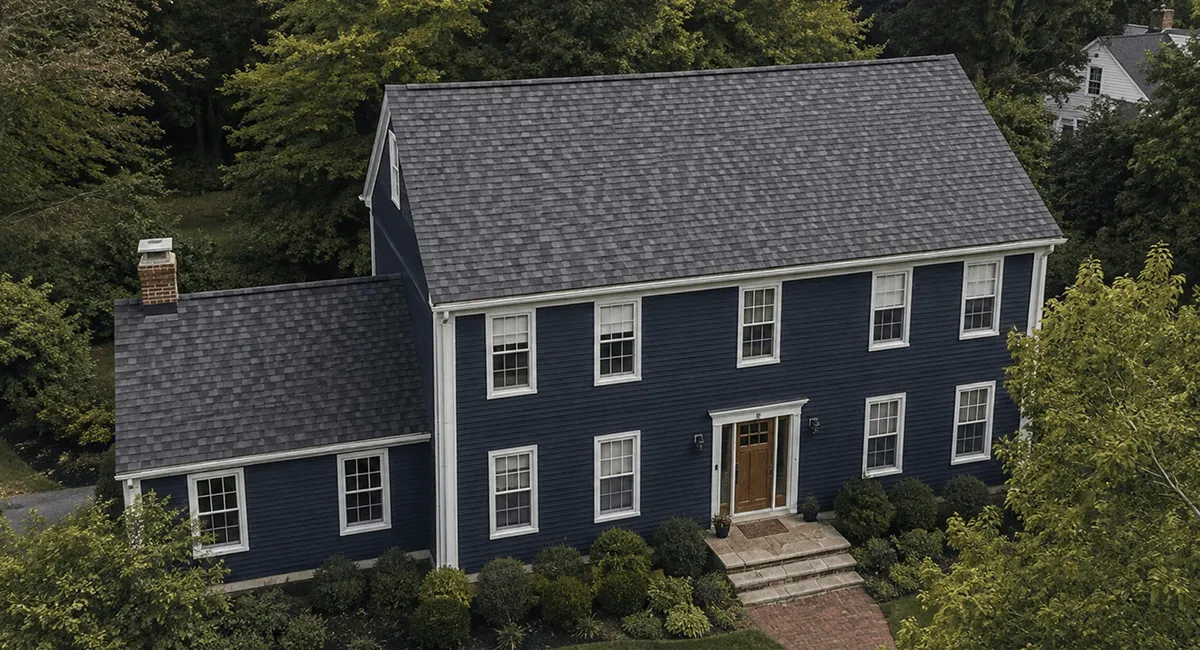
Planning a reroof on a historic Andover home? Historic district roof approval in Andover depends on which review board applies to your property.
Historic district roof approval in Andover depends on which of two very different review boards your property falls under, and the roofing rules between them are not close. One requires a full Certificate of Appropriateness before any roof work happens. The other explicitly does not review most roofing material changes at all. Knowing which one applies to your home before you request a quote can save weeks of confusion.
Do I Need Approval for a Roof in an Andover Historic District?
Historic district roof approval in Andover applies differently depending on your property's designation. If your home sits inside the BallardVale Historic District, a formal Certificate of Appropriateness is required from the BallardVale Historic District Commission before any exterior work visible from a public way, including roofing, and before a building permit can be issued. If your home is instead listed on the Andover Historic Building Survey or the National Register but sits outside BallardVale, it falls under the Andover Preservation Commission, which explicitly does not review standard roofing material changes unless the material itself is unique, such as wood shingle, slate, or tile.
What Homeowners Usually Notice First
Most Andover homeowners planning a reroof do not realize there are two separate historic review systems in town until a contractor or the building department raises the question. The confusion is understandable. Both processes involve the word "historic," both involve a commission, and both can affect a roofing project, but the actual requirements are almost opposite of each other depending on which one applies.
Homeowners inside BallardVale typically find out quickly, since the town requires the Certificate of Appropriateness before a building permit is even issued, so the roofer or the homeowner hits that requirement early in the process. Homeowners under the Preservation Commission's review, covering properties on the broader Historic Building Survey or National Register listings outside BallardVale, often assume the same strict roofing rules apply, only to learn that standard asphalt shingle replacement is not something that commission reviews at all, provided the material stays standard and unchanged in design.
A scenario we see occasionally in Andover involves a homeowner on a National Register-listed property who delays a roof replacement for months, assuming a lengthy commission review is required, before learning that a standard shingle-to-shingle reroof on their specific property does not trigger Preservation Commission review at all, since the material itself is unchanged and unremarkable. Meanwhile, a neighbor two streets over inside the BallardVale district assumes the opposite, that a straightforward reroof will not need any approval, only to have a permit application flagged and delayed because BallardVale's requirement is broader and applies regardless of material type.
What a Roofing Contractor Looks For
On many roofing estimates we prepare in Andover, the first thing we confirm is not the shingle color or material, it is which historic designation, if any, applies to the specific address. A roofer evaluates this by checking whether the property sits within BallardVale's mapped boundary, since that determines whether a Certificate of Appropriateness is required regardless of what material is being installed.
What homeowners often miss is that the Andover Preservation Commission's review is narrower and material-specific. Roofing material changes are explicitly excluded from that commission's review unless the material is something unusual, wood shingle, slate, or tile, meaning a standard asphalt shingle reroof on a Preservation Commission-listed property, outside BallardVale, typically proceeds through the normal building permit process without a separate historic hearing. That is a meaningful difference from BallardVale, where the requirement applies to any exterior work visible from a public way, roofing included, without a material-based exception.
We also check what other exterior work might be planned alongside the roof, since the Preservation Commission does review changes to siding, windows, trim, and roof lines together. A project that only touches the shingles might avoid review entirely, but if the same project involves reshaping a roofline, adding a dormer, or changing trim details visible from the street, that combination of changes can trigger a review even when the roofing material alone would not have.
For homes inside BallardVale specifically, we also confirm what documentation the Commission will expect, since applications there require detailed information about material, color, and design before the Commission meets, and the Commission meets only once a month, on the first Wednesday. Missing that monthly cycle by even a few days can push a project's timeline back a full month before an application is even reviewed.
Common Mistakes Homeowners Make
The most common mistake is assuming a National Register listing or historic designation automatically means the same strict roofing rules everywhere in town. Andover's two-tier system means the actual requirement depends entirely on which specific commission has jurisdiction over the property, not just whether the home is generally considered historic.
The second mistake, more common for BallardVale properties, is signing a roofing contract before confirming Certificate of Appropriateness status. Since a building permit cannot be issued without that certificate inside BallardVale, a contract signed without accounting for the monthly hearing schedule can leave a homeowner with a signed agreement and a crew ready to work, but no legal path to start until the certificate is issued.
The third mistake is assuming any exterior change on a Preservation Commission-listed property is automatically exempt from review just because roofing material specifically is excluded. Combining roof work with other exterior changes, like a roofline modification or new dormer, can bring the whole project back under review even when a simple reroof alone would not have needed it.
How to Decide: Which Process Applies to My Home?
If you are unsure which category your Andover property falls under, the fastest way to find out is checking whether the address sits within BallardVale's mapped district boundary, available through the town, or confirming your property's specific listing status on the Andover Historic Building Survey or National Register. A straightforward material-only reroof on a listed but non-BallardVale property is likely to proceed without a formal historic hearing. Any roof work on a BallardVale property should be planned around the Commission's monthly meeting schedule from the very start.
If your project involves more than the roofing material itself, changes to the roofline shape, added dormers, or altered trim visible from the street, plan for review under either system, since scope changes beyond simple material replacement are more likely to draw scrutiny regardless of which commission applies.
Local Context: Andover's Historic Preservation Framework
Andover's approach reflects a broader pattern under Massachusetts General Laws Chapter 40C, the state's enabling statute for local historic districts, which BallardVale operates under directly. The Andover Preservation Commission functions differently, reviewing permit applications for buildings on the town's Historic Building Survey, the Massachusetts Historical Commission inventory, or the National Register, with a narrower scope focused on preserving defining architectural features rather than regulating every exterior material choice.
This two-tier structure is not unique to Andover, but the specific carve-out for standard roofing material under the Preservation Commission is worth knowing before assuming the worst about project timelines. Fall is a particularly relevant time to sort this out, since construction season is winding down and permitting activity typically slows heading into winter, making an early confirmation of your property's status the difference between finishing a reroof before the weather turns and waiting until spring.
What to Do Next
If you own a historic or historically listed home in Andover and are not sure which review process applies to your roof, the right first step is confirming that status before requesting quotes. Restoring a historic home? Let's navigate approval together, so your project timeline reflects reality rather than an assumption about which rules apply. Our Siding and roofing teams often coordinate on historic properties where roofline, trim, and siding changes are reviewed together, not as separate projects.
You can also visit us in Danvers, MA to bring your property details and figure out which process applies to your home.
Frequently Asked Questions
How do I find out if my Andover home is inside the BallardVale Historic District?
The town maintains a mapped boundary for the BallardVale Historic District, available through Andover's planning division. Checking this before requesting roofing quotes tells you immediately whether a Certificate of Appropriateness will be required before a building permit can be issued.
Does a standard asphalt shingle reroof need approval on a National Register-listed Andover home?
Often not, if the property is reviewed under the Andover Preservation Commission rather than BallardVale. That commission's guidelines explicitly exclude standard roofing material changes from review, unless the material itself is unique, such as wood shingle, slate, or tile.
How long does BallardVale's Certificate of Appropriateness process take?
The BallardVale Historic District Commission meets once a month, on the first Wednesday, so plan for at least a full monthly cycle between submitting an application and receiving a decision. Missing a given month's meeting deadline pushes the timeline back another full month.
Can I change my roofline shape without triggering historic review?
This is less likely to avoid review than a simple material swap. Both BallardVale and the Preservation Commission take a closer look at changes affecting the roof's visible shape or design, even in cases where a straightforward material replacement alone would not have required review.
What happens if I install a new roof without required approval in BallardVale?
The town will not issue a building permit without the required Certificate of Appropriateness, so most licensed contractors will not begin work without it in hand. If work somehow proceeds without approval, the property owner can be required to redo it to match an approved design, which costs considerably more than obtaining approval first.

Gustavo Cardoso, President.