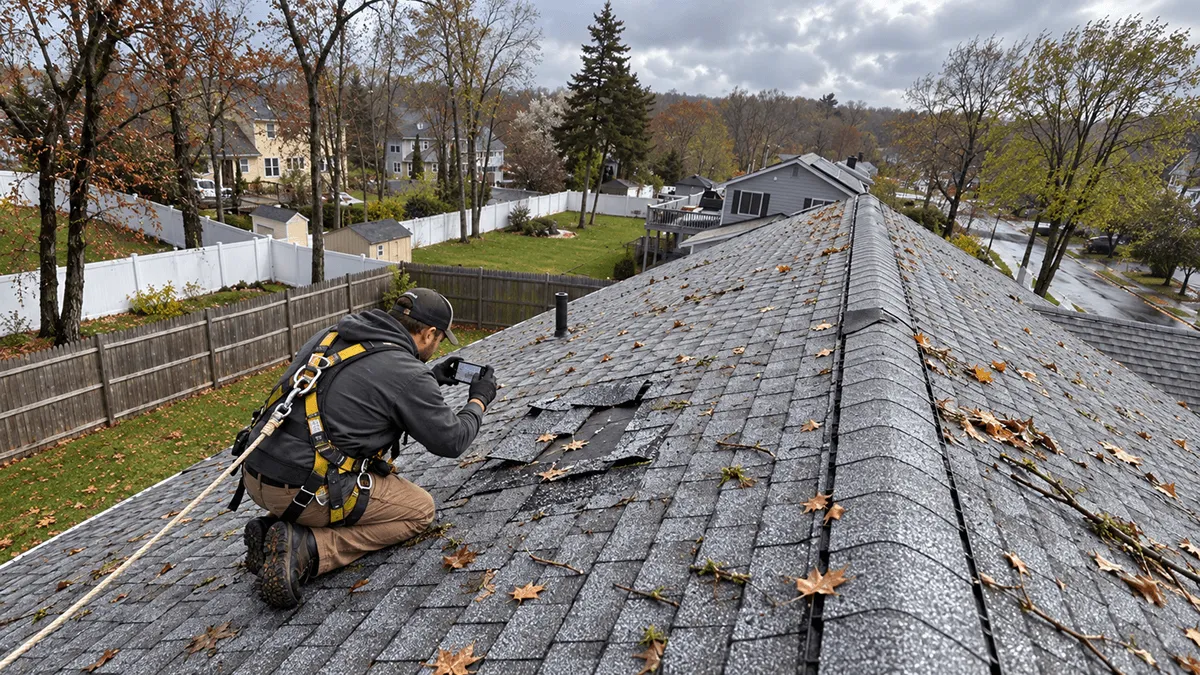
A step-by-step guide to nor'easter roof damage in Wakefield, from safe assessment to documentation, without DIY repair risks.
The morning after a bad coastal storm, most calls we get aren't about the storm itself, they're about what to do next. Nor'easter roof damage in Wakefield tends to follow a pattern year after year: missing shingles, damaged flashing, and gutters pulled loose by wind and ice. Here's a practical guide to assessing it safely and documenting it properly, without turning it into a DIY repair project.
Quick Answer: What Should You Do First?
Start from the ground. Walk your property and look for shingles in the yard, dented gutters, or visible gaps in the roofline, all without climbing up yourself. Photograph anything you see, along with any interior stains or active leaks. Contact your insurance carrier to start the claims process, and get a written assessment from a licensed, registered roofing contractor before agreeing to any repair work. Nor'easter roof damage in Wakefield often looks worse, or sometimes less serious, than it actually is from the ground, which is why a professional assessment matters before decisions get made.
What Homeowners Usually Notice First
The most obvious signs are shingles scattered in the yard, a dented or detached gutter section, or debris caught against the roofline. These are the easy-to-spot indicators that prompt most calls.
What often gets missed is damage that isn't visible from the ground at all. Wind-driven rain during a nor'easter can force water under shingles that look intact, and flashing around chimneys or vents can shift just enough to let water in without any obvious exterior sign. Nor'easter roof damage in Wakefield frequently includes this kind of hidden issue, which is exactly why a ground-level look isn't the full picture.
What a Roofing Contractor Looks For
On many post-storm inspections, we see homeowners focused entirely on missing shingles, which makes sense since that's the most visible damage. A roofer evaluates more than the obvious. We check flashing at every roof penetration, look for lifted or creased shingles that may reseal poorly even if they're still technically in place, and examine attic decking from inside for early signs of water intrusion.
What homeowners often miss is that a nor'easter's sustained, wind-driven rain behaves differently than a typical summer thunderstorm. Water gets pushed sideways and upward under roof edges in ways gravity-fed rain doesn't. Nor'easter roof damage in Wakefield often shows up along ridge lines and roof edges facing the storm's wind direction, areas a homeowner might not think to check first.
Winter Hill Roofing provides storm assessments and works with homeowners on Storm Damage & Insurance documentation throughout Wakefield and the surrounding North Shore.
Common Mistakes Homeowners Make
The most common mistake is climbing onto the roof personally to assess damage right after a storm. Wet, wind-damaged roofing is more dangerous to walk than it looks, and a fall risk isn't worth avoiding a phone call to a professional.
A second mistake is signing an agreement with the first contractor who shows up at the door. Storms bring an increase in unsolicited door-to-door offers, and Massachusetts consumer protection guidance specifically flags same-visit pressure to sign as a red flag. A legitimate local roofer will give you time to review a written estimate.
A Wakefield homeowner described exactly this scenario after a recent coastal storm. A contractor showed up unprompted, offered to "handle everything" with their insurance company, and pushed for a signature that same afternoon. The homeowner held off, called their own carrier first, and got a second opinion, which found the actual nor'easter roof damage in Wakefield was more limited than the door-to-door contractor had described.
A third mistake is delaying temporary protection while waiting for an insurance adjuster to schedule a visit. A tarp over an exposed section, placed safely from the ground or by a professional, can prevent a limited amount of damage from turning into a much larger interior problem while paperwork is still in progress. Most policies expect a homeowner to take reasonable steps to prevent further damage, and documenting that temporary protection with photos and a receipt supports the claim rather than working against it.
Decision Guidance: Repair, Document, or Both?
Document everything before any repair work begins, even temporary tarping, with dated photos from multiple angles. Contact your insurance carrier directly rather than through a contractor claiming to handle it for you. Get a written estimate from a licensed, registered roofer, and confirm their registration number, which Massachusetts law requires on every contract and estimate.
One customer described their experience with a related storm-resilient project this way: "Mateus and Gustavo and their team kept us updated daily and answered all our questions. We had our flat rubber roof removed and replaced over 6 straight days of working, even though the incredible heat wave we were experiencing. We've since had several downpours and all is well." That kind of follow-through, staying available after the work is done, matters just as much after storm repairs as it does during installation.
Local Weather Context: Why Nor'easters Hit Wakefield Hard
Nor'easters get their name from the direction the wind blows as the storm tracks up the coast, and that sustained northeast wind is part of what makes them different from a typical rainstorm. NOAA's records for Boston Logan Airport show the 2014-2015 winter, driven by a series of major nor'easters, brought 110.6 inches of snow, a season still referenced by roofers because of the ice dam and structural damage it caused region-wide. Wakefield's lake-adjacent, tree-lined neighborhoods see their own version of this exposure, with wind-driven debris and prolonged saturation adding to the risk during a multi-day storm system.
Wakefield's proximity to Lake Quannapowitt and its surrounding tree cover adds a specific wrinkle during a nor'easter. Sustained wind from the storm's northeast track can drive branches and debris against rooflines that are otherwise well protected during a typical summer storm, and lakefront exposure means some homes take wind from a direction their landscaping and siting weren't originally planned around. This is part of why two homes on the same street can come through the same storm with very different amounts of damage, and why a general assumption about "how bad it was" based on a neighbor's roof isn't a reliable substitute for your own inspection.
Ready for a Professional Storm Assessment?
If you're dealing with nor'easter roof damage in Wakefield, a documented, professional assessment is the safest and most useful first step, both for your roof and for your insurance claim. You can also visit us in Danvers, MA to talk through what we'd check on your specific roof. Get a professional storm damage assessment.
It's also worth keeping a simple folder, digital or physical, for anything related to storm recovery. Save your written estimate, any correspondence with your insurance carrier, dated photos, and receipts for temporary repairs in one place as you go. If a claim takes weeks to resolve, which is common after a widespread regional storm strains adjuster availability, having everything organized from day one makes follow-up conversations faster and reduces the chance something gets lost between phone calls.
Frequently Asked Questions
How soon after a nor'easter should I get my roof assessed?
As soon as it's safe to do so, ideally within a day or two. Nor'easter roof damage in Wakefield that's addressed quickly is easier to document clearly, and a fast tarp on any exposed area helps prevent additional water damage while a full assessment and repair are scheduled.
Will my insurance definitely cover nor'easter roof damage?
That depends entirely on your specific policy, which only your carrier can confirm. A roofing contractor can document damage and provide a professional estimate to support your claim, but we can't guarantee coverage or a specific payout amount.
How do I know if a contractor at my door after a storm is legitimate?
Ask for their Massachusetts contractor registration number, which state law requires on every contract, permit, and advertisement. A legitimate local contractor will have this ready immediately. Be cautious of anyone pressuring you to sign an agreement on the spot.
Can I do temporary repairs myself while I wait for an inspection?
Covering an active leak with a tarp from the ground, or through a safely accessible window or attic space, is reasonable. Climbing onto a wet, storm-damaged roof yourself is not recommended, since the risk of a fall is high even for people comfortable with heights in normal conditions.
Is nor'easter roof damage in Wakefield usually a repair or a full replacement?
Most storm damage we see is repairable, especially when addressed quickly. Full replacement becomes more likely when a roof was already near the end of its lifespan before the storm, or when the storm exposes widespread decking damage once a repair is underway.
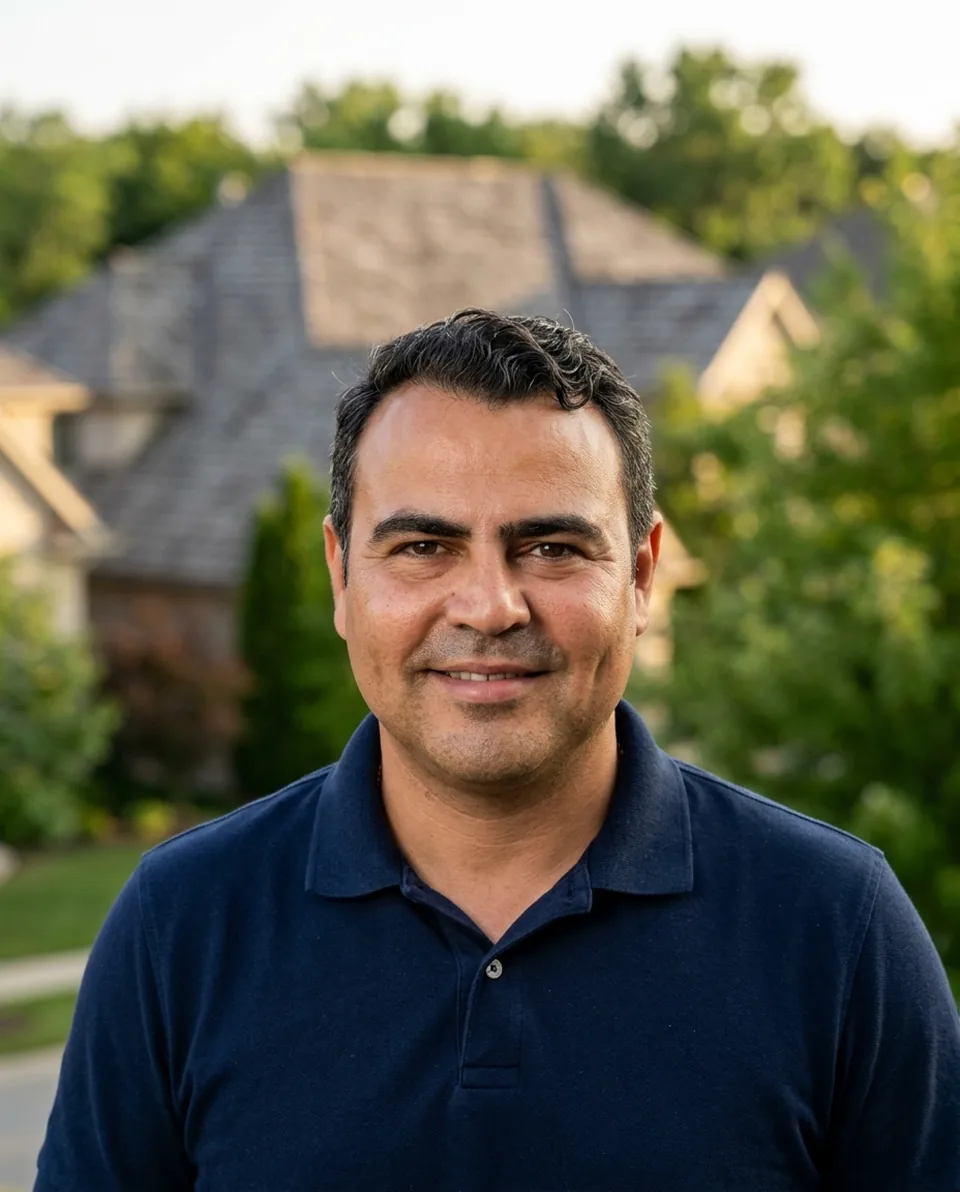
Gustavo Cardoso, President.