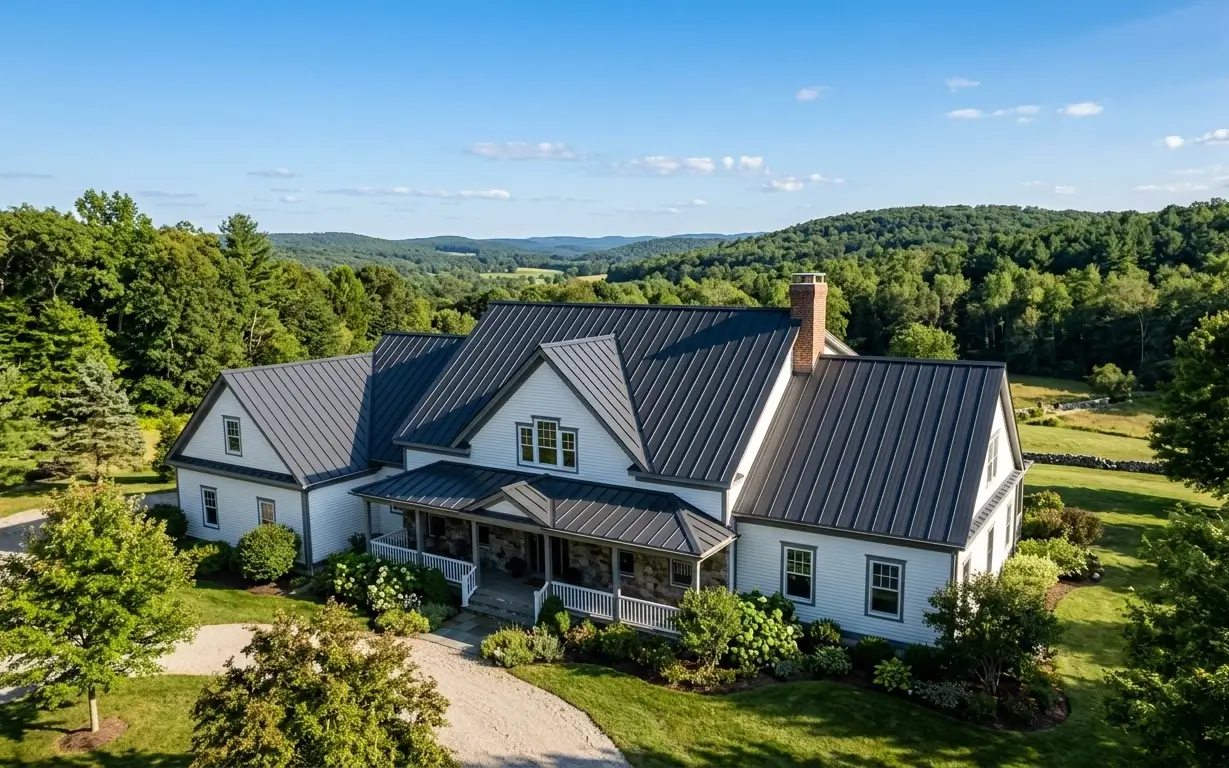
Wind and rain from a Nor'easter can lift shingles and open leaks you will not see from the ground. Here is a homeowner's checklist.
A strong Nor'easter can do damage you will not notice until the next rain finds its way in. Here is what we tell our North Shore neighbors to check after a storm.
A Nor'easter is not a normal rainstorm. It pulls cold, wet wind in off the Atlantic and drives it against the coast for hours, sometimes more than a day. Roofs in Danvers, Beverly, Salem, and the towns around them take that wind from the northeast at an angle that lifts shingles instead of pressing them down. Add rain or wet snow on top of it, and water gets pushed sideways under the courses of shingle where it was never meant to go. That is why a roof can look completely normal from the street and still be letting water into the deck.
The damage from a coastal storm is usually quiet. You rarely lose a whole section of roof at once. Instead, the wind loosens the seal strips that hold each shingle down, bends a piece of flashing, or works a few nails loose. None of that shows from the ground. It shows up weeks later as a stain on a bedroom ceiling, long after the storm is forgotten and a warranty claim is harder to tie back to the weather. Checking soon after the storm is how you catch it while the cause is still obvious.
What to look for
- Shingles that are lifted, curled, or missing along the edges and ridge.
- Granules collecting in the gutters or at the base of downspouts.
- Water stains on ceilings or along the top of exterior walls.
- Bent or loose flashing around chimneys, skylights, and walls.
You can check most of this from the ground with a pair of binoculars and from inside the house. Walk the perimeter and look up at the roof slope by slope. Pay attention to the edges, the ridge line, and anywhere two roof planes meet, because those are the spots the wind hits first. A few dark patches where the surface looks different from the shingles around them often means the top layer of granules has been stripped away, which leaves the asphalt underneath exposed to the sun and the next storm.
Check the inside too
Some of the clearest signs of storm damage are not on the roof at all. They are in your attic. On a dry day after the storm, take a flashlight up and look at the underside of the roof deck. You are looking for damp wood, dark streaks running down the rafters, or daylight showing through where it should not. Wet insulation, a musty smell, or a sagging spot in the ceiling below all point to water that has already made it past the shingles. Catching it here, before it spreads through the framing, keeps a small repair from turning into a structural one.
Two parts of the system do most of the work of keeping that water out. Ice and water shield is a sealed membrane laid along the eaves and in the valleys, and it is your last line of defense when wind pushes water under the shingles. Good attic ventilation keeps the deck dry and the temperature even, so storm moisture dries out instead of sitting and rotting the wood. When we inspect after a Nor'easter, both are near the top of the list, because a roof can survive the wind and still fail later if either one was skipped or has worn out.
What to do next
Do not get on the roof yourself, especially in winter. Call (978) 704-3039 for a free inspection. We document the damage with photos, give you a clear written report, and handle the permit and dumpster so any repair or replacement runs clean.
A wet roof in January is one of the most dangerous places you can stand, and a slip is not worth a closer look at a shingle. It is also easy to miss the damage that matters or, just as costly, to mistake normal wear for storm damage and spend money you did not need to. We walk the roof, get into the attic, and tell you what the storm actually did. If it is a handful of shingles and a length of flashing, we say so. If the wind found an older roof that was already near the end of its life, we lay out the options without pushing you toward the bigger job.
Move on it while the cause is fresh. A written, photo-documented report taken right after the storm is far stronger than a guess made months later, and it makes any insurance conversation simpler. Small repairs done now also stop the slow leaks that quietly soak insulation and framing all winter. If the work turns out to be larger than a quick fix, financing through Hearth can spread the cost so a sound roof does not have to wait for spring.
The bottom line
Winter Hill serves the North Shore. A GAF Master Elite crew walks every roof. Call (978) 704-3039 for a straight answer about yours.
We are family owned, based in Danvers, and have worked on North Shore roofs since 2014 across asphalt, metal, and slate systems. We carry Massachusetts home improvement contractor license HIC #204047, and the inspection is free whether the storm left you with a real problem or nothing more than peace of mind. Most of our calls come from neighbors a few streets over, and that is the way we like it. After the next Nor'easter, give your roof the once-over above, and if anything looks off, call (978) 704-3039 before the next rain arrives.

Gustavo Cardoso, President.