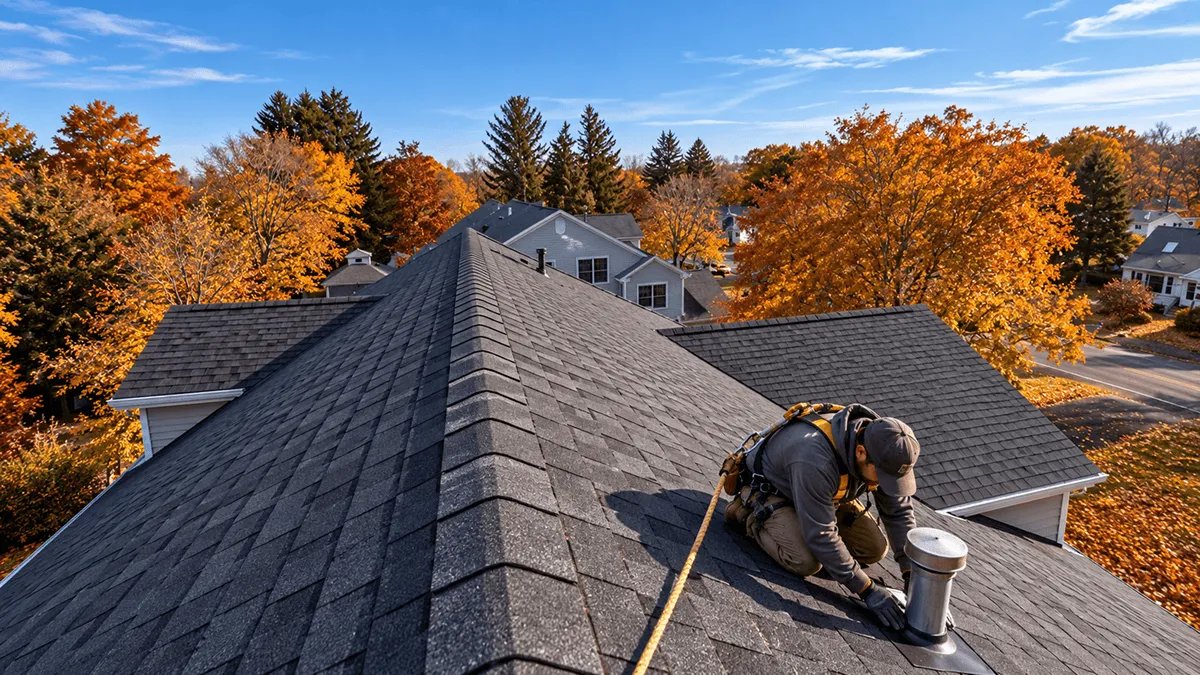
Small roof problems get worse in winter. Here's our roof repair in Winchester checklist to fix them while the weather still allows it.
By the time snow is on the ground, small roof problems have usually turned into bigger ones. Fall is the last realistic window for roof repair in Winchester before cold weather limits what a crew can safely fix. Here are seven things worth checking now, while there's still time to act on them.
Quick Answer: What Should You Check Before Winter?
Focus on curling or missing shingles, flashing around chimneys and skylights, attic ventilation, gutter attachment points, sagging sections of the roofline, moss or algae patches, and your overall timeline for booking a repair. Any one of these can turn into a winter emergency if it's ignored. A roof repair in Winchester completed in October or November costs less time, money, and stress than the same fix attempted during an active leak in January.
What Homeowners Usually Notice First
Most homeowners first notice a problem indirectly, through a small water stain on a ceiling, a slightly higher heating bill, or a shingle that's visibly lifted at one corner after a windy week. These signs often get dismissed as minor since they're not causing an active leak yet.
What often gets missed is how quickly a small issue compounds once freezing temperatures arrive. A gap in flashing that's dry and harmless in October can let meltwater directly into your attic once ice dams start forming in January. That's the core reason roof repair in Winchester matters more on a schedule than it does as a reactive, wait-and-see project.
What a Roofing Contractor Looks For
On many roof inspections, we see homeowners focused on the shingles themselves, which makes sense since that's what's visible from the ground. A roofer evaluates the roof more broadly. We check flashing seals around every penetration point, chimneys, skylights, vent pipes, since that's where the majority of leaks actually originate, not in the open field of shingles.
What homeowners often miss is attic ventilation's role in roof repair in Winchester. A poorly ventilated attic traps heat, which melts snow unevenly across the roof surface and contributes directly to ice dam formation. A repair that only addresses a visible shingle problem without checking ventilation can leave the underlying issue untouched.
Here are the seven specific things worth checking before winter:
1. Curling or missing shingles. Lifted edges let wind-driven rain underneath.
2. Flashing around chimneys and skylights. The most common leak origin point on any roof.
3. Attic ventilation. Poor airflow drives uneven snowmelt and ice dam formation.
4. Gutter attachment points. Loose gutters are more likely to be torn off by ice later in the season.
5. Sagging or soft sections. Any dip in the roofline deserves a closer look.
6. Moss or algae patches. These hold moisture against shingles and can lift edges over time.
7. Your repair timeline. Booking now, rather than in January, means avoiding the winter emergency backlog.
Winter Hill Roofing handles Roof Repair throughout Winchester, with particular experience on the town's older, more architecturally detailed rooflines.
Common Mistakes Homeowners Make
The most common mistake is treating a small leak as a wait-and-see problem. Roof repair in Winchester is almost always cheaper and faster when addressed at the first sign of an issue rather than after water has already reached the interior.
A second mistake is assuming any visible fix, like a shingle swap, addresses the underlying cause. If flashing or ventilation issues caused the original problem, a surface-level patch will likely fail again within a season or two.
A Winchester homeowner described exactly this pattern to us this fall. They'd patched a small roof leak themselves the previous spring, only to have it reappear in the same spot after the first cold snap. A proper roof repair in Winchester traced the issue to a flashing gap around a nearby vent pipe, not the shingles the original patch had addressed.
A related mistake shows up around timing rather than technique. Some homeowners wait for a slow-drip leak to get bad enough before calling anyone, not realizing that fall's shorter, milder rain events actually make diagnosis easier than winter's frozen, snow-covered roof surfaces. Once snow accumulates, a roofer often can't safely access the exact spot causing a leak, which can turn a same-week fix into a wait-until-spring situation, with interior damage accumulating the whole time.
Decision Guidance: Repair or Replace?
Most issues caught early are straightforward repairs. Consider full replacement instead if your roof is already near the end of its expected lifespan, if repairs are becoming frequent in different spots rather than the same one, or if a contractor finds widespread decking damage once a section is opened up. Costs vary significantly by scope, so treat any estimate as specific to your roof rather than a fixed, universal number.
One recent customer described their experience this way: "We used Winter Hill Builders to replace and upgrade our rapidly deteriorating roof. Gustavo, our project manager, was very friendly, responsive, and attentive to detail. The crew attacked this job, removing the old roofing, identifying and repairing issues needing attention, and installing a beautiful new roof, all in under 2 days and on budget. They cleaned up thoroughly before they left and even came back a couple weeks later to do another pass to make sure no materials were missed."
Local Weather Context: Why Timing Matters in Winchester
Winchester's older homes have stood through decades of harsh New England winters. NOAA's records for Boston Logan Airport show the 2014-2015 winter alone brought 110.6 inches of snow, a season roofers still reference because of how many ice dams and roof failures it caused region-wide. A roof repair in Winchester completed before that kind of season begins is far more effective than trying to patch a problem mid-storm.
Booking early also matters simply because of demand. Roofing crews across the North Shore tend to fill their fall schedules quickly as more homeowners realize winter is approaching, and a contractor with a backlog stretching into December may not be able to reach a smaller repair before the first hard freeze. Reaching out as soon as an issue is noticed, rather than waiting for a convenient week, keeps more scheduling options open.
It also helps to keep a simple record of what you find during your own walk-around, even before a professional gets involved. Note the date you noticed a stain, lifted shingle, or damp spot, and take a few photos from the ground with a phone. That timeline can matter later, whether it's helping a contractor diagnose how quickly an issue developed or supporting a conversation with your insurance company if a storm makes an existing problem worse. It costs nothing and takes only a few minutes, but it's a step many homeowners skip until they wish they'd done it.
Ready to Get Ahead of Winter?
If you've noticed any of the seven signs above, now is the time to act, while weather conditions still allow for a proper repair. You can also visit us in Danvers, MA to talk through what we'd look for on your specific roof. Get a free repair estimate before winter.
Frequently Asked Questions
How much does roof repair in Winchester typically cost?
It varies significantly by scope. A single flashing repair costs far less than addressing decking damage found once a section is opened up. We recommend a free estimate rather than relying on a general number, since Winchester's older housing stock varies widely in what a repair actually involves.
Can roof repair in Winchester be done once it's cold outside?
Yes, within limits. Many repairs are still possible in cold weather, but shingle sealing works best above certain temperatures, so some fixes are safer and more effective if scheduled before the coldest stretch of winter arrives.
How do I know if it's a repair or if I need a full replacement?
A good rule of thumb: isolated issues in one area usually mean a repair, while recurring problems in different spots, or a roof already near the end of its expected lifespan, point toward replacement. A professional inspection is the clearest way to know for sure.
What's the most common cause of roof leaks you see in Winchester?
Flashing failures around chimneys, skylights, and vent pipes account for more leaks than worn shingles do. Many homeowners focus on shingle conditions and overlook these smaller connection points, which is exactly where we start every inspection.
Is it worth fixing a small leak myself before calling a professional?
A temporary tarp to stop active water intrusion is reasonable in an emergency, but a permanent fix usually requires identifying the actual source, which can be different from where water is visibly entering the attic or ceiling. DIY patches often address the symptom rather than the cause.
Should I get more than one estimate before scheduling a repair?
It's reasonable to do so, especially for a larger repair, but make sure each estimate is based on the same scope of work. A lower number that skips flashing or ventilation checks isn't actually a better deal if the underlying cause goes unaddressed and the same leak returns within a year.

Gustavo Cardoso, President.