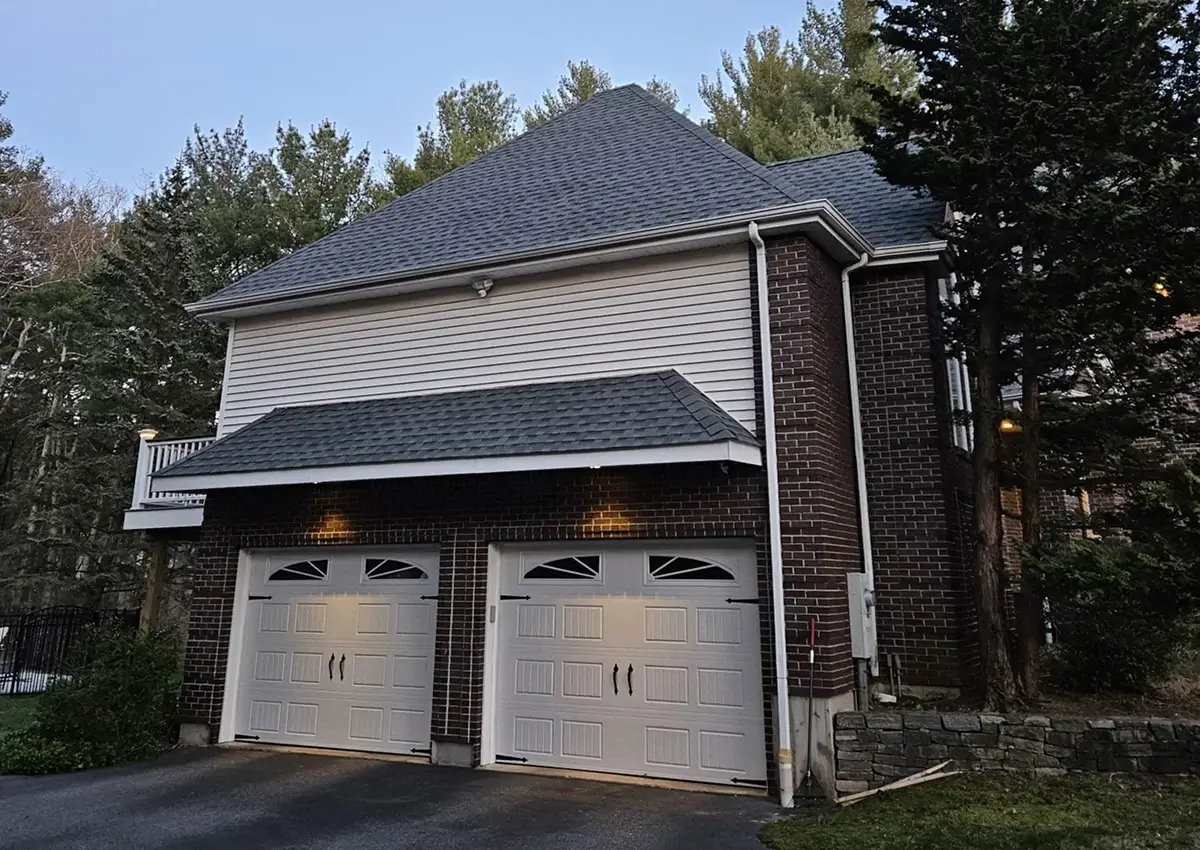
Planning a roof replacement in Concord? Learn how the Historic Districts Commission, material rules, and permitting timelines actually work.
A roof replacement in Concord almost never starts with a shingle color. It starts with a question most homeowners do not expect: is this house inside one of Concord's six Historic Districts? If it is, the roofing material, the color, and sometimes even the flashing detail need a Certificate of Appropriateness before a permit gets pulled. Skipping that step is the single most common delay we see on Concord roof jobs, and it is completely avoidable if you know it is coming.
Do I Need Approval for a Roof Replacement in Concord?
If your home sits inside one of Concord's Historic Districts, yes. Any roof replacement in Concord that changes the visible material, profile, or color of the roof needs a Certificate of Appropriateness (COA) from the Historic Districts Commission before the town will issue a building permit. In-kind repairs, meaning the same material replaced the same way, are usually treated differently than a full material change, but the Building Commissioner will not sign off on a permit either way without the HDC's paperwork in hand. Homes outside the six districts follow the standard Massachusetts building permit process with no HDC review at all.
What Homeowners Usually Notice First
Most Concord homeowners find out about the historic overlay the hard way, usually when a contractor asks for their address and pauses before quoting a timeline. The house has looked the same for 40 years. Nothing about the roof itself seems unusual. Then a phone call to the Concord Historic Districts Commission reveals that the roofline, the material, and even the flashing color all fall under review because the home sits inside the American Mile, Church Street, or one of the other five districts established since 1960.
The second thing homeowners notice is timing. HDC hearings happen once a month, not on demand. If an application needs revisions, that adds another full cycle before a decision comes back. A homeowner who assumed a two-week turnaround, standard for most towns, is often surprised to learn six to eight weeks is more realistic once a hearing date, review, and certificate filing with the Town Clerk are all factored in.
What a Roofing Contractor Looks For
On many roof inspections we run in Concord, the visible shingles are only part of the story. A roofer evaluates the roof deck itself first, because a lot of Concord's older housing stock, especially Colonial and Federal-era homes near Concord Center, was originally built with skip sheathing: spaced boards with gaps between them, rather than solid plywood decking. That construction worked fine under wood shake or slate, but it will not properly support most modern shingle systems without an overlay of solid decking first. Skipping this step is how a roof ends up with soft spots or fastener pull-through within a few years.
What homeowners often miss is the weight difference between roofing materials, and why it matters for a historic home. Natural slate can weigh 800 to 1,500 pounds per square (a 10-by-10-foot section), depending on thickness. Many older Concord roofs were framed to carry that load originally, but a century of settling, past water damage, or a previous owner's repairs can change what the structure can safely hold today. We check rafter spacing and any signs of sagging or previous reinforcement before ever recommending natural slate again on an older frame.
This is also where synthetic slate earns its place in the conversation. Composite slate alternatives weigh a fraction of the real material, often under 2 pounds per square foot, while closely matching the color, texture, and shadow lines of the original. The Historic Districts Commission's own guidelines note that original roof material should be maintained or replaced in kind where possible, and in our experience presenting a synthetic slate sample alongside the original material at a hearing is one of the more effective ways to get an in-kind match approved without the structural upgrade natural slate would require.
We also flag copper flashing and valley work early. A lot of the dormer-heavy Colonial and Federal rooflines around Concord Center were originally detailed with copper, and the HDC often expects that detail preserved on visible slopes, even when the main roof field changes material.
Common Mistakes Homeowners Make
The most common mistake is signing a contract before confirming HDC status. A roofer who does not ask about the district, or a homeowner who assumes an older home is automatically "grandfathered," can end up with a completed roof that has to be partially redone because it never had a Certificate of Appropriateness.
The second mistake is treating the ice barrier requirement as optional on a historic home. Massachusetts building code (780 CMR) requires an ice and water shield membrane at the eaves in this climate zone, regardless of whether the home sits in a historic district. This detail is not usually visible once the roof is finished, so it rarely triggers HDC review, but skipping it to save time or money is a code violation, not a stylistic choice, and it is one of the fastest paths to an ice dam leak in a Concord winter.
The third mistake is picking a material based only on appearance from the street. We often see homeowners fall in love with a slate look without weighing the structural and cost differences against synthetic slate, which can run considerably less per square while still passing HDC review as an appropriate in-kind match in most cases we have submitted.
How to Decide: Natural Slate, Synthetic Slate, or Asphalt?
If the home is inside a Historic District, start with what was originally on the roof, not what you would prefer today. The Commission weighs historical accuracy heavily, and an application proposing the closest match to the original material moves through review with fewer conditions attached.
If the original material was slate and the structure can support it, natural slate is the safest approval path, though it carries the highest material and structural cost. If budget or structural load is a concern, a quality synthetic slate is usually the next best option and, in our experience, is approved at a similar rate when the sample matches closely.
If the home sits outside any of the six Historic Districts, this decision opens up considerably. Asphalt architectural shingles, standing-seam metal, or synthetic slate are all reasonable options based on budget, roof pitch, and how long you plan to stay in the home.
Local Context: Concord's Historic Districts and Timing
Concord was the fourth community in Massachusetts to establish local historic districts, starting with four in 1960 and adding Hubbardville in 1998 and Church Street in 2005. The HDC does not just weigh architectural detail. Because Concord's districts include sites tied to Emerson, Hawthorne, and the Alcotts, the Commission is directed by its founding act to consider literary and historical significance alongside standard design review, which is part of why roofing material changes here get more scrutiny than in most Massachusetts towns.
Practically, this means anyone planning a roof replacement in Concord's historic areas should budget six to eight weeks for HDC review before a permit is even possible, on top of normal scheduling. Anyone planning it during the spring or summer construction season should apply early. Hearing calendars fill up, and a missed monthly cycle can push a project from a summer start into fall.
What to Do Next
If you are not sure whether your home falls inside one of Concord's Historic Districts, that is the first call to make, either to the town or to us. Planning a historic-home reroof? Let's talk permitting and materials before you request a single quote, so the timeline and the material choice line up with what the Commission will actually approve. Our Roof Replacement process includes flagging HDC requirements up front, not after a contract is signed.
You can also visit us in Danvers, MA to bring photos of your roofline and talk through material options in person.
Frequently Asked Questions
How long does HDC approval take for a roof replacement in Concord?
Plan for six to eight weeks minimum. The Commission meets monthly, and if your application needs revisions or additional documentation, such as scaled drawings or a material sample, that adds another full cycle. Applying well before your planned construction season, especially before spring and summer when demand is highest, avoids the biggest delays.
Can I replace my roof with the same material without HDC approval?
Often, yes, if it is a true in-kind repair using the same material, profile, and color, since routine maintenance is commonly exempt from review. But "same material" is judged by the Commission, not the homeowner, so it is worth a quick call to confirm before assuming a repair qualifies as in-kind.
Is synthetic slate accepted by Concord's Historic Districts Commission?
It can be, when the sample closely matches the color, texture, and shadow lines of the original slate. Every application is reviewed case by case, so bringing an actual material sample to the hearing, not just a photo, gives the Commission something concrete to evaluate against the original roof.
Does my roof need an ice barrier even if it's a historic home?
Yes. Massachusetts building code requires an ice and water shield membrane at the eaves regardless of historic district status, since this is a structural moisture protection requirement, not an exterior appearance element the HDC reviews. It typically will not affect your Certificate of Appropriateness application.
What happens if I install a new roof without a Certificate of Appropriateness?
The town's Building Commissioner will not issue a permit without one, so most contractors will not start the work at all. If a roof is somehow installed without approval, the town can require it to be redone to match an approved material, which is a far more expensive outcome than getting the certificate first.
Gustavo Cardoso, President.